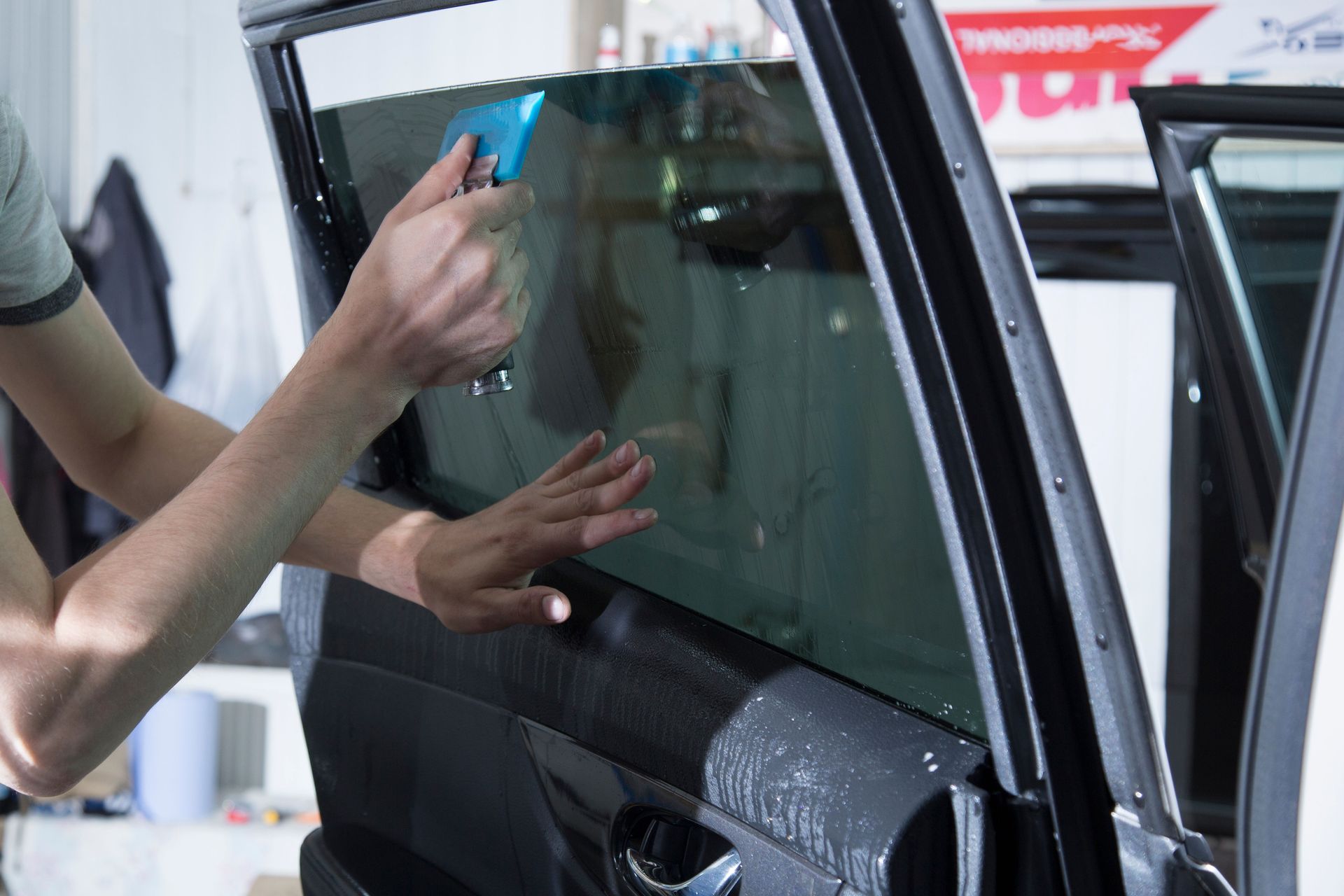
North Carolina Window Tint Laws in 2026: What Every Driver Must Know
Window tint is one of the most common vehicle modifications in North Carolina, and it is also one of the most commonly misunderstood from a legal compliance standpoint. Drivers move to the state from South Carolina, Virginia, Georgia, and other markets with different VLT requirements and assume their existing tint meets local standards. Drivers buy used vehicles with factory-installed aftermarket tint and assume the previous owner verified compliance. Drivers get tinted at shops that install whatever shade the customer requests without measuring the combined result against the legal threshold.
Every one of these scenarios produces the same outcome: a vehicle on North Carolina roads with non-compliant tint that creates traffic stop citations, annual inspection failures, and removal and reinstallation costs that a single compliance check before booking would have prevented. Understanding exactly what North Carolina's tint law requires in 2026, how it is enforced, and what the consequences of non-compliance look like gives every driver the framework to make informed decisions before any film touches their glass. Champion Window Tinting has been installing compliant window tint in Cornelius, NC and across the Charlotte area since 2001, and the guidance here reflects what the law actually requires and how it plays out in real-world situations.
Why Understanding NC Tint Law Matters Before You Book
Most drivers who discover their tint is non-compliant do so at the worst possible moment. A traffic stop where the officer uses a VLT meter on the front side window. An annual vehicle inspection where the station officer measures the glass and marks the vehicle as failing. Both situations create immediate consequences that a pre-booking compliance check would have entirely prevented.
What Happens When Your Tint Is Non-Compliant in North Carolina
Non-compliant window tint in North Carolina results in a traffic citation that requires the driver to correct the violation within a specified period and provide proof of correction to the issuing authority. The financial consequences include the citation fine, the cost of professional removal of the non-compliant film, and the cost of reinstallation at a legal VLT level. The total of these three expenses consistently exceeds what a legal installation from the start would have cost.
Beyond the financial impact, a vehicle with non-compliant tint fails its annual North Carolina safety inspection until the violation is corrected. In a state that requires annual inspections for all registered vehicles, non-compliance is not a manageable long-term situation. Every inspection cycle becomes a compliance forcing event for drivers who have ignored a citation or been unaware of the issue.
North Carolina Window Tint Laws by Window Position
North Carolina's tint law specifies different requirements for different window positions. Understanding each position separately prevents the most common compliance mistakes that drivers and installers make when applying general assumptions to specific windows.
Front Side Windows
Front side windows in North Carolina must allow more than 35 percent of visible light through. This is the most strictly enforced and most frequently tested requirement in the state's tint law. Law enforcement officers target front side windows during traffic stops because they are the most accessible for VLT meter measurement and the most relevant to officer safety during vehicle interactions.
The 35 percent minimum means that 35 percent or more of available visible light must pass through the glass including both the factory glazing and any aftermarket film. A film rated at 35 percent VLT applied to factory-clear glass produces a combined measurement at or just above the legal threshold. The same film applied to factory glass with its own light-filtering properties may produce a combined measurement below 35 percent, creating a non-compliant result even though the film specification appears to meet the requirement.
Rear Side Windows
Rear side windows in North Carolina can be tinted to any darkness level on multipurpose vehicles including SUVs, vans, and trucks as long as the vehicle is equipped with outside mirrors on both the driver and passenger sides. For standard passenger sedans and coupes, rear side windows must also meet the 35 percent minimum VLT requirement.
This vehicle type distinction is the most commonly misunderstood aspect of North Carolina tint law. Drivers who own SUVs know they can run dark rear glass legally but may not know that the same darkness level on a sedan rear window creates a violation.
Rear Windshield
The rear windshield follows the same rules as rear side windows. Multipurpose vehicles with dual outside mirrors can have any darkness level on the rear windshield. Passenger sedans must meet the 35 percent VLT minimum on the rear windshield as well. Because virtually every modern vehicle has outside mirrors on both sides, the practical effect is that rear windshield tint darkness is unrestricted for most North Carolina vehicles.
Windshield Tinting Rules in North Carolina
North Carolina permits non-reflective tint on the top five inches of the windshield only. This visor strip reduces direct glare from above during early morning and late afternoon driving without obstructing the primary driving field of vision. Any tint applied below the five-inch visor strip on the main windshield is prohibited for standard passenger vehicles. The five-inch measurement is taken from the top of the windshield downward and applies regardless of whether the vehicle has a factory sun band already applied.
Reflectivity and Color Restrictions
North Carolina tint law includes restrictions on reflectivity and color that apply in addition to VLT requirements. Front and rear side windows cannot have a metallic or mirrored appearance that creates a reflective look from outside the vehicle. Red and amber tinted film is prohibited on all windows in the state. These color and reflectivity restrictions apply regardless of whether the VLT measurement otherwise complies with the legal threshold.
North Carolina Tint Laws by Vehicle Type
The vehicle type distinction in North Carolina's tint law creates meaningfully different compliance requirements depending on how the vehicle is registered and classified.
Passenger Vehicles Sedans and Coupes
Standard passenger vehicles registered in North Carolina as sedans or coupes must meet the 35 percent VLT minimum on all non-windshield windows including front side windows, rear side windows, and the rear windshield. There is no relaxation of this threshold for rear glass on passenger sedans even when dual outside mirrors are present. Every non-windshield window on a sedan must transmit more than 35 percent of visible light.
SUVs Vans and Multipurpose Vehicles
Multipurpose vehicles including SUVs, vans, trucks, and minivans operate under different rules for windows behind the front seat. Front side windows on these vehicles must still meet the 35 percent VLT minimum without exception. Rear side windows and the rear windshield on multipurpose vehicles with outside mirrors on both sides can be tinted to any darkness level. This allows North Carolina SUV and truck owners to run very dark rear glass while keeping front side windows at the legal threshold, producing the maximum privacy and heat rejection combination on rear passengers while maintaining full compliance.
How North Carolina Tint Law Is Enforced in 2026
Understanding how enforcement works helps Charlotte area and Cornelius drivers know what to expect at traffic stops and annual inspections and what documentation provides protection when compliance questions arise.
VLT Meters and Traffic Stop Enforcement
North Carolina law enforcement officers carry handheld VLT meters that measure the actual combined light transmission through any window on a vehicle during a traffic stop. The measurement reflects both the factory glass and the aftermarket film together rather than the film specification alone. An officer can cite a driver based on this measurement regardless of what VLT the installing shop told the driver or what percentage appears on the film packaging.
Front side windows receive the most attention during traffic stops because they are the most accessible for measurement and the most relevant to officer safety during the interaction. Front windows that measure below 35 percent on the combined reading result in a citation regardless of what the film packaging states.
Annual Vehicle Inspection and Tint Compliance
North Carolina's annual vehicle safety inspection includes a tint compliance check. Inspection stations confirm that all windows meet the applicable requirements for the vehicle type and issue a failing result for any window that measures below the legal threshold. A vehicle cannot receive the required inspection sticker until the violation is corrected and the vehicle passes re-inspection.
This annual enforcement mechanism means that non-compliant tint cannot be quietly ignored indefinitely. Every North Carolina registered vehicle faces an annual compliance verification, which is why addressing any tint compliance concern proactively is always less expensive than carrying it through to the next inspection cycle.
Penalties for Non-Compliant Tint in North Carolina
A tint violation in North Carolina produces a traffic citation with a monetary fine that varies based on jurisdiction and whether the violation is a first or repeat offense. The citation requires correction within a specified timeframe with proof of correction submitted to the issuing authority. Failure to correct the violation within the required period escalates the financial consequences and creates additional legal complications that a timely correction would have avoided. The combined total of the initial fine, professional removal cost, legal reinstallation cost, and any re-inspection fees consistently exceeds the cost of a legal installation from the start.
Medical Exemptions for Window Tint in North Carolina
North Carolina provides a medical exemption pathway for drivers and passengers whose documented medical conditions require protection from sunlight beyond what standard legal tint provides.
How to Qualify for a Medical Exemption
A North Carolina medical exemption for darker window tint requires written documentation from a licensed physician confirming the specific medical condition that necessitates additional light reduction. Qualifying conditions typically include photosensitivity disorders, certain autoimmune conditions such as lupus, and specific eye conditions aggravated by direct sunlight exposure. The exemption documentation must be carried in the vehicle at all times and presented to any officer who questions the tint during a traffic stop or to an inspection station during the annual inspection.
Window tint installed under a medical exemption must still comply with North Carolina's reflectivity and color restrictions even when the VLT threshold is relaxed under the exemption. The exemption addresses the darkness level only, not the full range of regulatory requirements that apply to all window film installed in the state.
How Combined VLT Affects North Carolina Compliance
The combined VLT concept is the most important technical detail for any North Carolina driver to understand before booking a tint installation.
Why Factory Glass Affects Your Compliance
Every modern vehicle has factory glass with some degree of built-in light filtering that is part of the glass manufacturing process. This factory filtering reduces visible light transmission before any aftermarket film is applied. Most factory glass reduces VLT by 3 to 10 percentage points depending on the manufacturer and the specific window position.
A film rated at 35 percent VLT applied to factory glass that already reduces transmission by 8 percent produces a combined measurement of approximately 27 percent, falling below North Carolina's 35 percent minimum and creating a non-compliant installation. The driver and installer must account for the factory glass contribution when selecting film VLT to ensure the combined result meets the legal threshold.
How to Confirm Your Tint Is Legal Before an Inspection
The most reliable confirmation of compliance before an annual inspection is having the combined VLT measured by the installing shop using the same type of handheld meter that officers use at traffic stops. Champion Window Tinting measures combined VLT for every installation in Cornelius, NC to confirm compliance before the vehicle leaves the shop. Drivers with existing tint from another installer who are uncertain about compliance can request a measurement at any qualified shop. Knowing the combined reading before an inspection creates the opportunity to address any marginal measurements proactively rather than discovering the issue at the inspection station.
Common NC Tint Law Violations and How to Avoid Them
Installing 35 percent film without accounting for factory glass.
The most common compliance mistake in North Carolina. A 35 percent rated film on factory glass that already filters light produces a combined measurement below the threshold. Always confirm combined VLT before completing any installation.
Applying sedan rear window rules to SUVs or vice versa.
Some installers apply the multipurpose vehicle rear window rules to passenger sedans and install darkness levels that are only legal on SUVs and trucks. Confirming the vehicle's legal classification before choosing rear window darkness levels prevents this error.
Using reflective or mirrored film.
Metallic films with a mirrored appearance are prohibited regardless of VLT percentage. Any film with a reflective exterior appearance creates a citation risk even when the VLT measurement would otherwise pass.
Assuming out-of-state tint is legal in North Carolina.
Tint that is legal in South Carolina, Virginia, Georgia, or another neighboring state may not meet North Carolina's requirements. Every vehicle registered in North Carolina must comply with state law regardless of where the tint was installed or where the vehicle was previously titled.
Choosing Legal Window Tint in North Carolina
Film Type and Legal Compliance
Film type affects both compliance and performance. Ceramic films at 35 percent VLT deliver the best heat rejection and UV blocking available within North Carolina's legal threshold because the UV and infrared blocking comes from the ceramic particle chemistry rather than the visible darkness level. A 35 percent VLT ceramic film blocks up to 99 percent of UV radiation, which means legal compliance and maximum interior protection are achieved simultaneously without needing to go darker than the law allows.
Dyed films at 35 percent VLT are technically compliant at installation but degrade faster under North Carolina's UV season, which runs from March through October with UV index values regularly reaching 8 to 10 during peak summer months in the Charlotte area. Degrading dyed film shifts color and may affect VLT readings over time, creating a compliance risk that did not exist at installation.
Why Certified Installation Protects You
A certified installer who measures combined VLT before completing the installation provides documentation confirming the measured compliance at the time of service. This documentation is valuable when compliance questions arise at traffic stops or inspections because it demonstrates that the installation was performed to legal standards. Champion Window Tinting provides written confirmation of the VLT level and legal compliance for every window tint installation in Cornelius, NC because this documentation protects both the customer and the shop from the ambiguity that verbal compliance assurances cannot resolve.
How NC Tint Law Compares to Neighboring States
Charlotte area and Cornelius drivers who regularly cross state lines need to understand how North Carolina's requirements compare to adjacent jurisdictions.
South Carolina vs North Carolina
South Carolina permits front side windows to transmit more than 27 percent of visible light, which is more permissive than North Carolina's 35 percent minimum. A South Carolina legal front window tint installation at 30 percent VLT does not comply with North Carolina law. Drivers who commute or travel regularly between the two states face a practical compliance challenge when their tint meets one state's standard but not the other's. For Charlotte metro drivers in this situation, installing film at North Carolina's stricter 35 percent threshold ensures compliance in both states simultaneously.
Virginia vs North Carolina
Virginia requires front side windows to transmit more than 50 percent of visible light, which is significantly more restrictive than North Carolina's 35 percent minimum. A North Carolina legal 35 percent front window installation does not comply with Virginia law. Drivers who travel frequently to Virginia, particularly those in Cornelius and the northern Charlotte area with easy access to I-77 north, should be aware that their legally compliant North Carolina tint creates a technical violation during Virginia driving.
Common NC Tint Law Misconceptions in 2026
Any tint a shop installs is automatically legal. Shops are not required to verify combined VLT compliance before completing an installation. The vehicle owner bears legal responsibility for the tint on their vehicle regardless of who installed it or what they were told about compliance.
The VLT percentage on the film packaging is what matters. North Carolina measures combined VLT including factory glass at traffic stops and inspections. The film's rated specification is a starting point rather than a compliance guarantee. Combined measurement is what determines legal status.
Rear windows on any vehicle can be any darkness. This applies only to multipurpose vehicles with dual outside mirrors. Passenger sedan rear windows must meet the 35 percent minimum in North Carolina.
Medical exemptions allow any film on any window. Medical exemptions allow relaxation of the VLT threshold for documented conditions but do not override North Carolina's reflectivity and color restrictions. Exempt vehicles must still use non-reflective, non-prohibited-color film.
Conclusion
North Carolina window tint law in 2026 creates clear requirements that every driver in the state must meet regardless of where their vehicle was previously registered or where their tint was installed. The 35 percent VLT minimum on front side windows applies to every passenger vehicle without exception. Multipurpose vehicles have more flexibility on rear glass than sedans. Combined VLT including factory glass is what North Carolina measures at enforcement points, not the film's rated specification alone. Reflective and prohibited-color films create violations regardless of darkness level.
For Cornelius, NC and Charlotte area drivers who want window tint that delivers genuine heat rejection and UV protection within North Carolina's legal framework, Champion Window Tinting installs compliant ceramic window tint with combined VLT measurement confirmation and written compliance documentation on every project. Choosing a certified local installer who verifies compliance before the vehicle leaves the shop is the single most reliable protection against the costly cycle of citation, removal, and reinstallation that non-compliant tint creates.
Get North Carolina-Legal Window Tint in Cornelius, NC Today.
Legal compliance and genuine ceramic performance are not competing priorities. Champion Window Tinting in Cornelius, NC installs ceramic window tint at legally verified VLT levels with written compliance confirmation on every vehicle. Call or stop by the shop at 10415 Bailey Rd to discuss your vehicle type, confirm your legal VLT options, and get a written quote that covers film tier, VLT level, and warranty terms before any film is cut.
Frequently Asked Questions
1. What is the darkest legal window tint for a sedan in North Carolina in 2026?
For a standard passenger sedan in North Carolina, the darkest legal tint on any non-windshield window is any film that produces a combined VLT measurement of more than 35 percent including the factory glass. The film's rated VLT must be selected to ensure the combined measurement with the factory glass remains above the threshold. A film rated at 35 percent may or may not produce a compliant combined measurement depending on the factory glass in the specific vehicle. Measurement before completion of any installation confirms compliance.
2. Can I get a fix-it ticket dismissed if my shop made a mistake with the tint?
No. North Carolina law holds the vehicle owner responsible for the tint on their vehicle regardless of who installed it or what instructions were given to the installer. A shop error does not provide a legal defense against a tint citation. The violation must be corrected and proof of correction submitted to resolve the citation regardless of the circumstances that produced the non-compliant installation.
3. Does North Carolina require a tint compliance sticker on legal vehicles?
North Carolina does not currently require a compliance sticker or certificate to be displayed on tinted windows. However, retaining the written documentation provided by the installing shop including the measured combined VLT, the film product used, and the installation date is useful when compliance questions arise. Champion Window Tinting provides this documentation with every installation as standard practice.
4. How does North Carolina enforce tint laws at annual inspections?
North Carolina inspection stations use handheld VLT meters to measure the combined light transmission through all windows on the vehicle. Windows that measure below the applicable threshold for the vehicle type fail the inspection. The vehicle cannot receive the required inspection sticker until the non-compliant tint is removed and the windows are re-inspected and confirmed compliant. Re-inspection fees apply in addition to the cost of tint removal and replacement.
5. Is 35 percent VLT ceramic film darker or lighter than factory privacy glass on an SUV?
Factory privacy glass on most SUVs and trucks has a VLT of approximately 15 to 20 percent, which is significantly darker than 35 percent. A 35 percent VLT ceramic film applied to windows without factory privacy glass appears noticeably darker than clear glass but lighter than the factory privacy glass on the rear windows of most SUVs. The front side windows where North Carolina's 35 percent minimum applies are typically clear factory glass, making 35 percent aftermarket film the maximum darkness available on those windows for full legal compliance in the state.
Articles from the Champion Window Tinting Blog
Champion Window Tinting Services