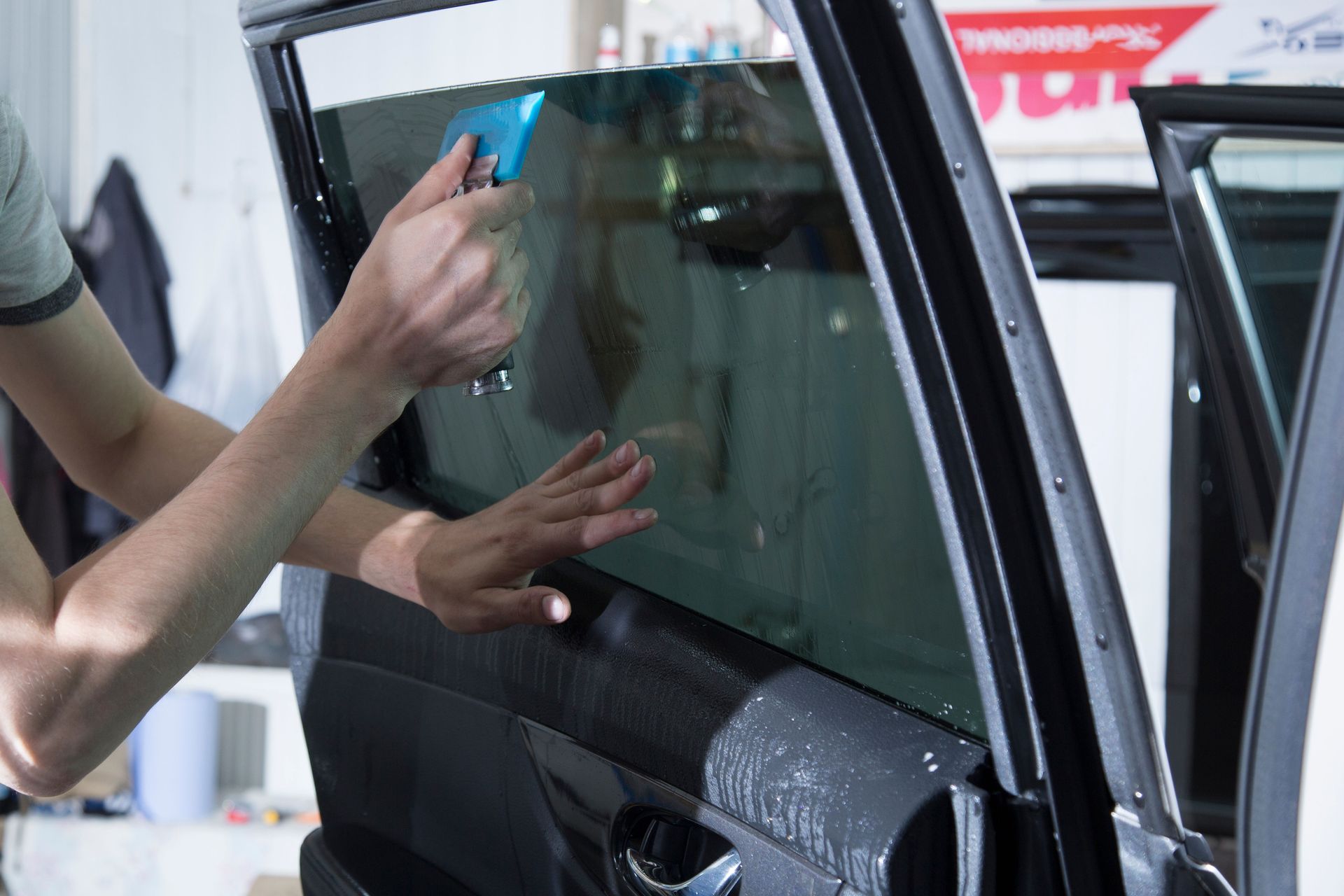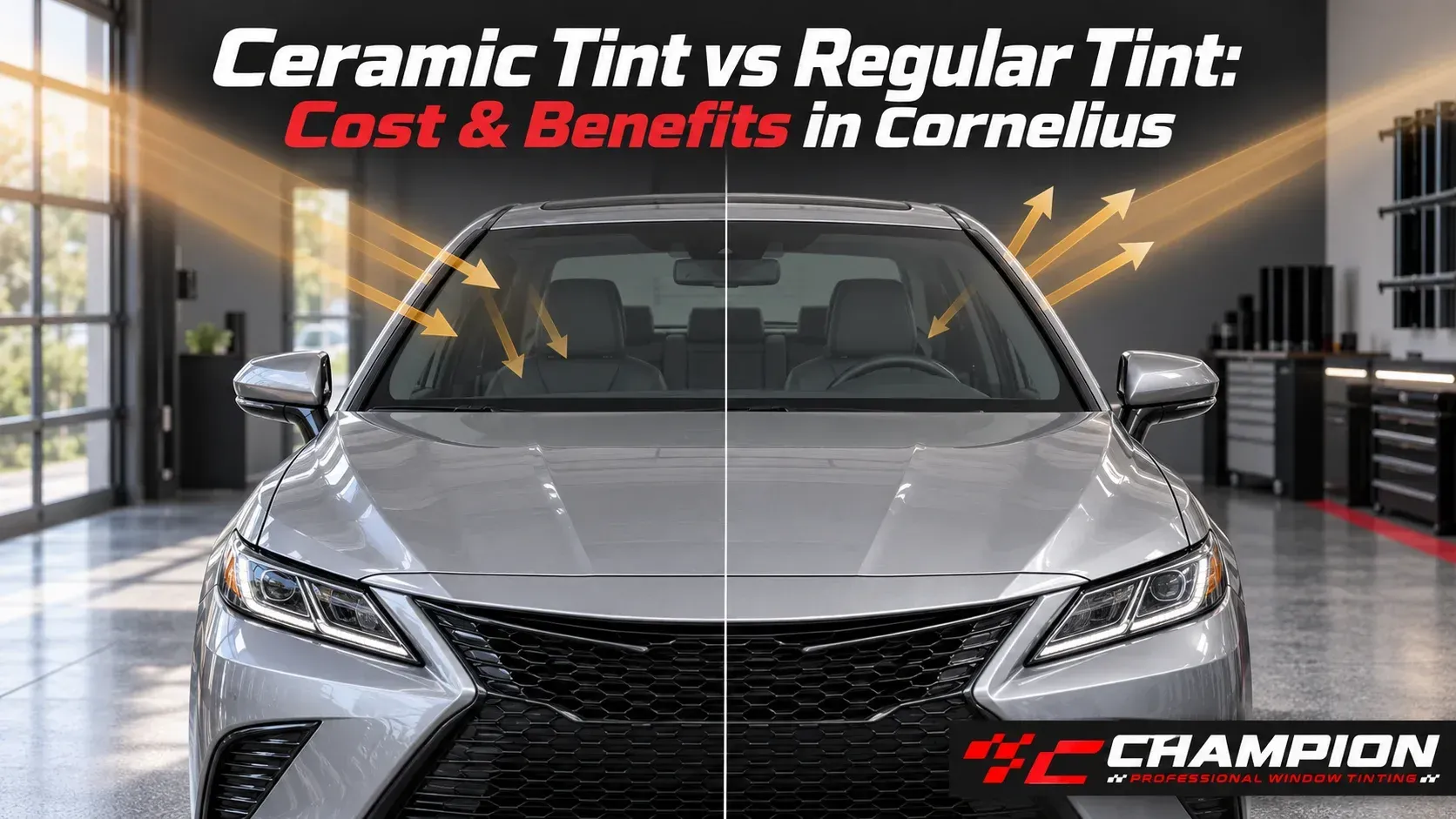
Comparing ceramic tint vs. regular tint starts with a familiar problem: darker windows don't always mean better heat control. For Cornelius and Lake Norman drivers, ceramic film can reduce solar heat without requiring the darkest available shade. At Champion Window Tinting, automotive window tinting in Cornelius focuses on ceramic options. The right upgrade depends on measured performance, visibility, installation quality, and price. This comparison explains those differences before a film selection becomes an expensive guess.
Key Takeaways
- Ceramic tint can reject more solar heat than basic dyed tint at a similar shade, making it a stronger option for drivers who want better cabin comfort without choosing the darkest film.
- VLT, infrared rejection, and TSER measure different things. VLT describes visible light transmission, while TSER gives a broader measure of total solar energy rejected.
- Ceramic tint does not automatically provide better UV protection. Some dyed and ceramic films can both block 99% of UV rays, so heat performance and film quality should also be compared.
- Darker ceramic tint is not automatically easier to see through at night. At the same VLT, both ceramic and regular tint transmit a similar amount of visible light.
- Ceramic tint usually costs more than basic dyed film. Champion Window Tinting’s published 2026 full-surround ceramic packages start at $425, $525, and $625, depending on the selected tier.
- Ceramic tint does not change North Carolina tint laws. Regulated windows generally still need at least 35% total light transmission, with applicable vehicle and medical exceptions.
- Ceramic tint is most worthwhile when better heat control, lighter-shade performance, long-term ownership, and daily sun exposure justify the higher upfront cost.
What is the difference between ceramic tint and regular tint?
Ceramic tint contains microscopic ceramic materials that help manage solar energy without relying on a metalized layer. Regular tint usually means dyed film, although shops sometimes use that label for other constructions. Those descriptions identify broad categories, not fixed levels of quality.
Dyed film adds color and reduces transmitted light. Metalized products incorporate metal, while carbon and hybrid labels describe other formulations. Product names can blur these distinctions, so a written manufacturer specification matters more than a broad marketing category.
The comparison below treats regular tint as basic dyed film unless stated otherwise. Ceramic window film also differs from ceramic coating, which protects exterior surfaces rather than functioning as an applied tint sheet. Buying one service does not provide the benefits of the other.
Does ceramic tint reject more heat at the same shade?
Ceramic film can reject substantially more solar energy than basic dyed film at a similar visible shade. A useful comparison holds visible light transmission constant instead of comparing a dark product with a light one. For local drivers, Champion Window Tinting offers ceramic packages that separate film performance from darkness.
SolarFX provides a specific example in its published Classic and FX Plus specification tables. Both nominal 35% options report 99% UV rejection, but their total solar energy rejection differs. These are manufacturer examples, not a claim that both products are available at the shop.
| Published Specification | SolarFX Classic 35, dyed | SolarFX FX Plus 35, ceramic |
|---|---|---|
| Nominal visible light transmission | 35% | 35% |
| Total solar energy rejection | 37% | 63% |
| UV rejection | 99% | 99% |
| Infrared rejection | Not listed in this table | 96% |
The TSER difference is 26 percentage points for these listed products. It does not predict an identical percentage reduction in cabin temperature. Actual comfort also depends on glass coverage, sun exposure, ventilation, and air conditioning.
What do VLT, infrared rejection, and TSER actually measure?
VLT describes visible light
Visible light transmission, or VLT, describes how much visible light passes through a tested sample. Lower percentages mean darker glass. VLT does not describe UV protection or establish how effectively a product manages solar heat.
Infrared rejection describes a particular measurement
Infrared rejection addresses infrared energy under a stated test method or wavelength range. A large IR number does not mean that film blocks the same percentage of all solar energy. Comparisons need matching test conditions because different measurements can be misleading.
TSER describes broader solar performance
Total solar energy rejection, or TSER, gives a broader measure of solar energy rejected by the tested glazing system. Compare TSER at similar VLT values and under comparable testing conditions. A heat-lamp demonstration can illustrate a difference, but a specification sheet provides a clearer basis for buying.
Does regular tint block UV rays as well as ceramic?
Some dyed films provide strong UV protection, so ceramic does not automatically win this category. The manufacturer example above gives both products the same 99% UV rejection rating. That leaves solar heat rejection as the clearer performance difference between those particular films.
For Cornelius drivers, Champion Window Tinting lists ceramic packages for comfort and interior protection. Selecting among those packages should involve more than checking a UV percentage. Film construction, solar performance, appearance, warranty coverage, and installation quality all deserve consideration.
UV protection also does not mean complete protection against every cause of interior aging. Heat, visible light, cleaning habits, and ordinary wear still matter. Treat film as one part of interior maintenance, not a promise that upholstery will never fade.
Is ceramic tint easier to see through at night?
Ceramic tint does not make dark glass behave like clear glass after sunset. Two films with the same measured VLT transmit a similar proportion of visible light. Optical quality may differ, but a ceramic label cannot cancel the visibility loss from a very dark shade.
A lighter ceramic option can balance heat control with greater light transmission. That matters during evening trips around Cornelius, especially when parking or looking through side windows. Rain, limited street lighting, interior reflections, and individual eyesight can all change perceived visibility.
Review shade samples in realistic conditions instead of judging only a bright showroom display. Ask about haze, reflectivity, and the finished glass reading. Prioritize a clear view of pedestrians, mirrors, and road edges over matching an online photograph of another vehicle.
| Ceramic package | Two front windows, starting price | Full surround, starting price | What can change the total |
|---|---|---|---|
| Ceramic | $200 | $425 | Vehicle, glass layout, preparation, coverage |
| Ceramic Plus | $225 | $525 | Vehicle, glass layout, preparation, coverage |
| Ceramic Max | $250 | $625 | Vehicle, glass layout, preparation, coverage |
Cornelius drivers can call (704) 275-2002 to compare regular-film quotes with ceramic upgrades. Use the contact form to compare ceramic packages for a specific vehicle, including coverage, shade, and total installation price.
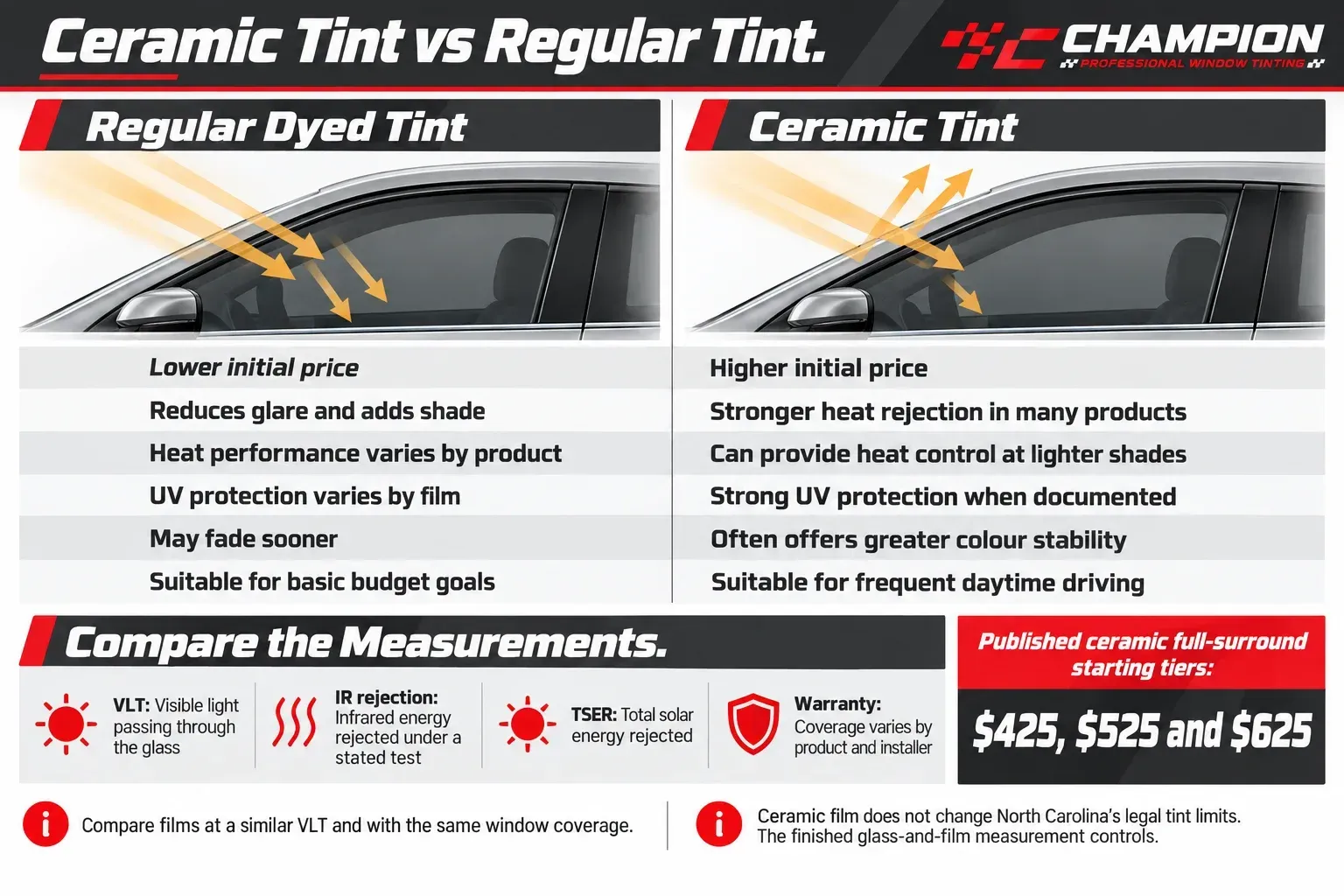
Full surround generally covers side and rear windows, excluding the windshield. Published starting prices are not fixed quotes for every vehicle. Larger panes, old-film removal, difficult access, and additional glass can raise the total.
Compare the same vehicle, including windows, removal work, warranty, and taxes, before judging the premium. The listed full-surround starting-price difference between Ceramic and Ceramic Max is $200. That comparison describes two ceramic tiers, not a universal price difference between ceramic and regular tint.
When is ceramic tint worth the extra money?
Regular daytime driving increases its practical value
Ceramic becomes more compelling when solar heat is a frequent complaint. Daytime commuting, outdoor parking, and repeated trips around Lake Norman create more opportunities to appreciate reduced heat through treated glass. The benefit is comfort during actual use, not simply owning the highest-priced film.
Longer ownership spreads the initial premium
A driver who keeps a vehicle for several years has more time to use the upgrade. Dividing an actual quoted premium by planned ownership months can clarify its personal value. That calculation does not prove financial payback or guarantee that another film would need replacement.
A lighter appearance can still provide useful performance
Some owners want heat control without very dark windows. Ceramic options can meet that preference when their specifications show meaningful solar rejection at higher VLT values. Select the exact product based on its measured results instead of assuming every ceramic tier performs equally.
When can regular tint still make sense?
Regular dyed film can suit a tight budget when appearance and basic glare reduction are the main goals. A quality product with documented UV protection may meet those needs. Short ownership plans or limited daytime driving can also reduce the personal value of a ceramic upgrade.
Existing film deserves a fair assessment before replacement. Clear, intact film that already meets an owner’s priorities may not need immediate removal. Replacing it solely because its construction is unknown can create avoidable expense without a clearly defined benefit.
Avoid treating the cheapest quote as automatically poor or the most expensive quote as automatically superior. Named products, measurable specifications, careful installation, and written coverage provide stronger evidence. Ceramic is most persuasive when its additional performance addresses a specific complaint that regular film leaves unresolved.
How can drivers confirm that a film is ceramic?
Request the manufacturer and exact series
A quote should identify more than broad marketing terms. Ask for the manufacturer, series, and selected shade before installation. Then compare that exact product with its published technical information, including VLT, TSER, and warranty terms.
Keep the installation record
The invoice should identify the installed film and covered windows. Keep any manufacturer registration or warranty documentation with that record. Written identification makes later service questions easier and provides better evidence than relying on memory or a salesperson’s description.
Understand what a demonstration cannot prove
Appearance alone cannot reliably identify ceramic construction. A dark dyed film and dark ceramic film may look similar from outside. A VLT meter measures light transmission, while a heat demonstration illustrates performance under its setup; neither alone authenticates a brand.
Does ceramic tint last longer than regular tint?
Quality ceramic films often offer strong color stability and manufacturer warranties. However, ceramic particles do not prevent every adhesive failure, scratch, installation defect, or maintenance problem. The full product system and workmanship influence how well an installation ages.
A lifetime warranty also doesn't mean every possible problem gets free repair forever. Coverage may depend on ownership, registration, authorized installation, and specific exclusions. Read the terms for materials and labor instead of assuming both receive identical protection.
Compare coverage for discoloration, peeling, bubbling, and other listed defects. Ask who handles a claim and what documentation the manufacturer requires. Avoid budgeting around a guaranteed replacement schedule for regular tint or a guaranteed lifetime without problems for ceramic film.
What should happen before and after installation?
Check existing glass and agree on coverage
The installer should assess existing film, factory glass, window condition, and the requested coverage. Factory privacy glass changes the starting point for both appearance and light transmission. A consistent-looking front-to-rear match may require different film selections rather than identical percentages everywhere.
Review workmanship alongside film specifications
Clean preparation, controlled handling, suitable patterns, and careful edge finishing matter with every film category. Rear defroster lines and old adhesive can complicate removal. An accurate estimate should separate that preparation from new-film installation instead of hiding it inside an unclear package description.
Follow the product’s curing and care instructions
Ask when windows can open and when interior glass can receive its first cleaning. Follow the installer’s product-specific timeline because curing conditions vary. Use the recommended cleaning method and report persistent defects rather than scraping, puncturing, or peeling the film at home.
Does factory privacy glass already provide ceramic performance?
Factory privacy glass and aftermarket ceramic film are different products. Dark rear glass doesn't establish a specific solar performance rating or prove that ceramic film is present. Vehicle specifications and existing-film records provide a better starting point than judging color from the parking lot.
Owners should first decide what needs improvement: front-to-rear appearance, glare, heat through particular windows, or overall cabin comfort. Those goals can lead to different coverage choices. Adding film to every pane without checking existing performance may spend money on an outcome the owner never needed.
An installer should also consider compatibility before treating specialized glass or large roof panels. Film recommendations for ordinary side windows do not automatically apply to every glazing system. Identify the glass and follow relevant manufacturer guidance before extending a package to additional surfaces.
How should drivers compare two window tint quotes?
A useful comparison starts with matching scope, not the number at the bottom. Two estimates can describe different windows, prep work, and product tiers, even if both say ceramic tint. Confirm those details before concluding that one installer charges more for the same work.
Record the film series, proposed shade, included panes, removal work, and warranty responsibilities beside each estimate. Then compare available specifications at similar visible light transmission. Missing product identification creates uncertainty that a lower price cannot resolve, especially when performance promises lack supporting documentation.
Finally, distinguish necessary work from optional upgrades. Existing-film removal may be necessary for replacement, while additional roof coverage may answer a separate comfort concern. A clear estimate helps owners allocate their budget to the windows and benefits that matter most.
Does ceramic tint change North Carolina’s legal limits?
Ceramic construction does not create a separate allowance for darker windows. The North Carolina window tint statute generally requires at least 35% total light transmission on regulated windows. Approved meter readings above 32% receive a presumption of compliance; vehicle and medical exceptions also apply.
The finished glass measurement matters, rather than the film label alone. Passenger-car side and rear windows generally follow the standard, while qualifying multipurpose vehicles have exceptions behind the driver. An installer must identify the vehicle category before recommending darker rear coverage.
Windshield tint has separate placement restrictions, including the five-inch or AS1 boundary, whichever measurement is longer. The statute also permits qualifying clear, untinted UV-reducing film that does not obstruct vision. A ceramic label or advertised windshield package does not establish that a particular installation meets those requirements.
Which window tint offers better long-term value?
Ceramic tint offers stronger value when improved heat control at a lighter shade justifies the additional cost. Regular film can still meet appearance, budget, and documented UV-protection needs. Compare equivalent coverage, verified specifications, nighttime visibility, and written warranty terms before deciding.
A careful installation completes the value equation. At Champion Window Tinting, drivers can discuss ceramic options around their vehicle and comfort priorities. The guide to choosing a window tint installer explains how preparation, product knowledge, and workmanship support that decision.
Call (704) 275-2002 to discuss ceramic tint options with Champion Window Tinting in Cornelius. Send the vehicle details to request a ceramic film and coverage estimate with shade and installation scope clearly identified.
Frequently Asked Questions
Is ceramic tint worth it for daily driving around Cornelius and Lake Norman?
Ceramic tint can be worth the premium when daytime heat is a frequent concern. Its value depends on the exact film, coverage, and how much time you spend driving. Compare solar rejection at similar shades, then request a vehicle-specific Cornelius quote that includes your windows and warranty terms.
Can I see better through ceramic tint than regular tint at night?
Ceramic tint does not automatically improve night vision. At the same measured VLT, both films transmit a similar amount of visible light. A lighter ceramic shade can balance heat control with visibility. Compare samples and avoid choosing dark film based only on daytime appearance.
How much do ceramic tint packages start in Cornelius in 2026?
Published 2026 ceramic full-surround packages start at $425, $525, and $625 across three tiers. Coverage generally includes side and rear glass, but not the windshield. Vehicle size, old-film removal, and extra glass can raise the total. Request a written estimate for the exact coverage.
Does regular window tint block UV rays, or do I need ceramic film?
Some regular dyed films block 99% of UV rays, so you don't need ceramic for that rating. Heat rejection can still differ substantially between products with identical UV figures. Check the named film’s UV and TSER specifications at the selected shade before deciding on an upgrade.
How can I tell whether my existing window tint is really ceramic?
Appearance alone cannot reliably identify ceramic film. Check the installation invoice, manufacturer name, exact series, and warranty record. A VLT meter only measures visible light transmission. Ask the original installer for product documentation before paying to replace unknown film.
Does choosing ceramic film make darker tint legal in North Carolina?
Ceramic film receives no separate darkness allowance in North Carolina. Regulated windows generally require at least 35% total light transmission. Factory glass affects the finished reading, and vehicle exceptions vary. Have the installer check the vehicle class and final glass result.
Articles from the Champion Window Tinting Blog

Champion Window Tinting Services